Last verified July 16, 2026. TrendTrack store counts checked live in the app; Amazon’s rules cross-checked against its official dropshipping policy.
Most guides treat Amazon dropshipping and Shopify like two checkout buttons for the same business. They are not the same business.
On Amazon, you rent an audience. On Shopify, you build one. That single difference decides your margins, your traffic, your rules, and whether you finish with a brand or just a receipt.
Amazon dropshipping puts your product in front of built-in buyers, but rents you the customer and squeezes the margin. A Shopify store costs more traffic work, yet you own the brand, the email list and the pixel data. Amazon suits fast, price-led selling, while Shopify suits building an asset you can sell later.
The myth: Amazon dropshipping is just a cheaper Shopify
The popular version goes like this. You find a $4 gadget on AliExpress, list it on Amazon for $25, and let the supplier ship it while orders roll in. No store to build, no ads to buy, no risk.
That model is not just hard. On Amazon, a big part of it is against the rules.
Amazon dropshipping: the upside
- Built-in buyers already searching to purchase
- No store to design or host
- Trust and checkout come from Amazon
- Fast to a first sale if you win the listing
The trade-off
- You must be the seller of record, not a middleman
- No customer email, no retargeting you own
- Referral fees near 15% per sale
- Price wars and the buy box decide your day
Here is the part the myth skips. Amazon’s dropshipping policy allows dropshipping only if you are the seller of record: you buy the stock, set the price, and own the returns and support.
Buying from another online retailer and having them ship to your customer under their branding is not allowed. Translation: the passive arbitrage version most people picture is the one Amazon polices hardest.
Who owns the customer, and who owns the traffic
This is the difference that compounds. On Amazon, the buyer belongs to Amazon: you rarely get an email, you cannot build a retargeting audience you control, and you play by marketplace rules that can change overnight.
On Shopify, the buyer is yours. You keep the email, the pixel data and the relationship, which is what lets a second sale cost you almost nothing instead of a fresh fee every time.
On Amazon you rent
Demand is built in and free to reach, but the customer, the data and the rules stay with the marketplace.
On Shopify you own
You start with zero traffic and pay to create it, but the audience you build is an asset you keep.
That is why traffic matters as much as fees. Amazon hands you shoppers who are already typing what they want to buy, so your job is to win the listing and the buy box against everyone selling something similar.
Shopify hands you an empty store: zero visitors until you buy ads on Meta or TikTok or earn organic reach, so the real skill is media buying and creative rather than listing optimization. So before you commit, ask whether you want to compete for a buyer who is already shopping, or create the demand yourself and keep the customer afterward.
What each channel actually costs
Amazon looks cheaper because the headline fees are small. A Professional selling plan is $39.99/mo, plus a referral fee around 15% on each sale, plus fulfillment costs if you use FBA.
Shopify looks more expensive up front. A Basic plan runs about $39/mo plus payment processing, plus the real line item nobody prices in: your ad budget. On Shopify you pay for traffic, while on Amazon you pay a cut for access to it.
| Dimension | Amazon dropshipping | Shopify store |
|---|---|---|
| Who owns the customer | Amazon | You |
| Traffic source | Built-in search demand | You buy or earn it |
| Monthly platform cost | $39.99/mo | ~$39/mo Basic |
| Per-sale cut | Referral fee ~15% | Payment processing only |
| Branding and control | Limited | Full |
| Main way to compete | Price and buy box | Product, brand, creative |
| Speed to first sale | Faster if you win the listing | Slower, needs traffic first |
| Best for | Fast, price-led selling | Building a brand asset |
Neither column is free. Amazon trades a percentage for demand you do not have to create, while Shopify trades a marketing budget for a customer you get to keep.
There is one more Shopify cost that never shows up on a pricing page: testing. Most products you run ads to will lose money before you find one that works, so budget for a few failed tests, not just the winner. That is the tuition for owning your traffic instead of renting it.
Related guide
Amazon vs Shopify Dropshipping
The full cost-by-cost side-by-side, fee for fee.
Finding a product that survives on Shopify
On Amazon, the buy box flattens everything toward price. On Shopify there is no buy box, so the product, the brand and the creative carry the whole business, which is exactly why you cannot guess. You need to see what is already scaling before you commit a budget to it.
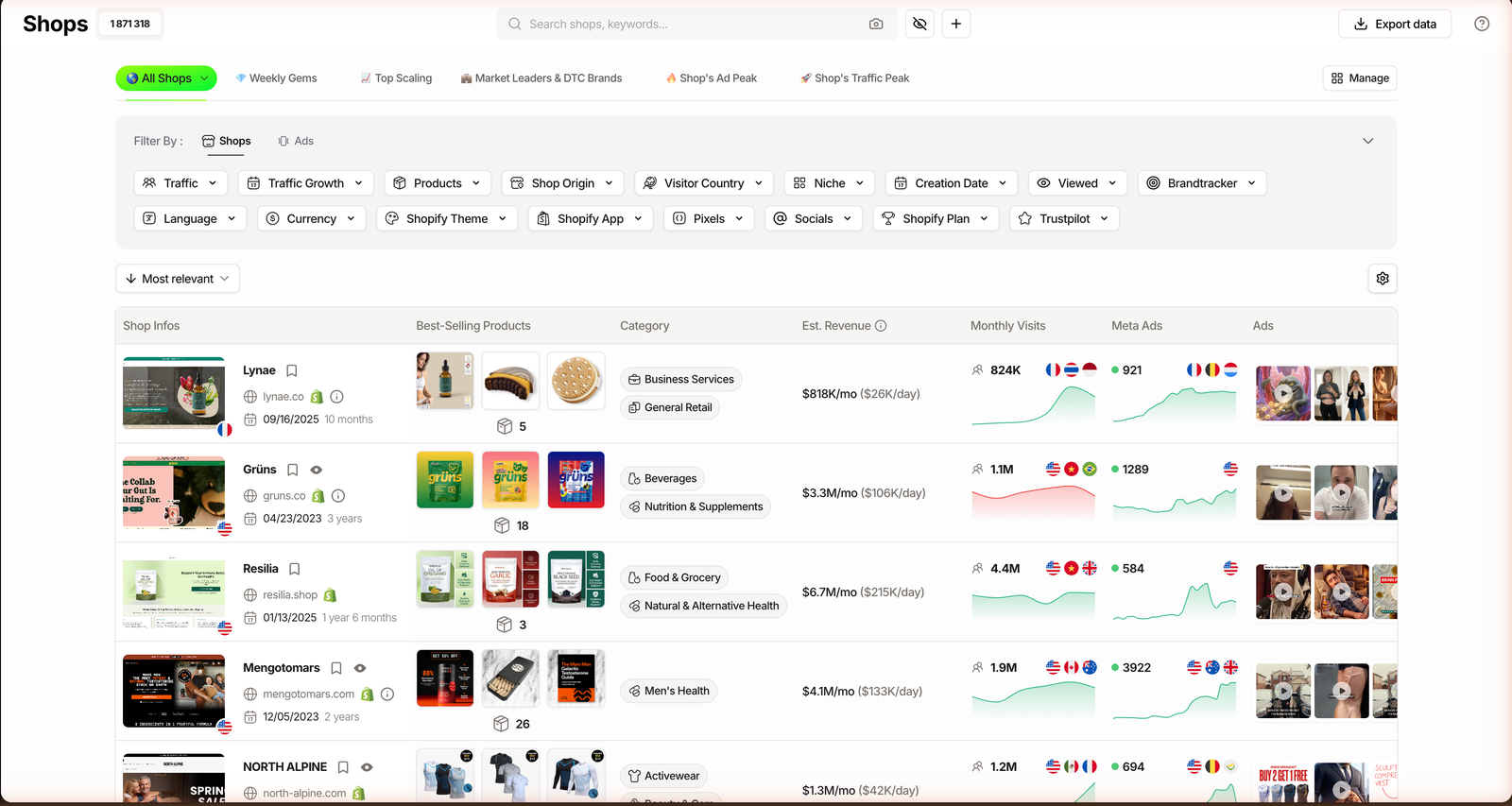
That is the job TrendTrack does on the Shopify side. It indexes 1,868,025 Shopify stores and lets you screen them by 17 filters, from niche and country to the tech stack, apps and pixels a store runs. Turn on the hidden Est. Revenue column and you get an estimated monthly and daily figure per store, so you can spot the products actually moving volume before you test one.
TrendTrack Shops module, checked July 16, 2026. Est. Revenue is an estimate, not audited sales.
Plan check: screening stores and the Est. Revenue column live in the Shops module, included from Starter ($59/mo). The ad spy modules (Ads and Advertisers) only start on Pro ($89/mo), so for market research alone, Starter is enough.
Disclosure: some links on this page are affiliate links. If you subscribe through them we may earn a commission at no extra cost to you. We tested every TrendTrack feature mentioned here on a paid account.
If you go the Shopify route, do this research first. It is the cheapest way to avoid burning your test budget on a product that already peaked.
Screen the Shopify market first
From $59/mo, or $42/mo billed annually.
Related guide
How to Find Winning Products in 2026
The research method behind every store that scales.
Which one actually scales
Scaling on Amazon means winning more listings and defending the buy box, usually by trimming price. Your ceiling is the category, and your margin gets thinner as competitors undercut you.
Scaling on Shopify means spending more on ads that work and raising average order value with bundles, upsells and a brand people remember. The margin is yours to widen, not just defend.
The margin gap: Amazon’s referral fee near 15% comes off every order, for the life of the product. On Shopify your cost is front-loaded into acquiring the customer, then repeat orders can run at near-zero marketing cost, which is why owned audiences compound and rented ones do not.
There is an exit angle too. A Shopify brand with its own audience and repeat buyers can be sold, whereas an account tied to a marketplace and a price war is far harder to hand off.
Durability is the real case for Shopify. A recognizable brand with a list behind it is harder for a competitor to copy than a listing, and it hands you pricing power that a race to the bottom never will. Amazon wins on speed, Shopify wins on what you keep.
So which should you pick?
The honest answer is that it is not always binary. Plenty of sellers run both, and there is a third route worth weighing: TikTok Shop as a third channel blends built-in demand with organic reach in a way neither Amazon nor a standalone store does.
Pick Amazon if
- You want a fast, price-led sales channel
- You would rather not learn media buying yet
- You can be the seller of record, not a reseller
Pick Shopify if
- You want to own the customer and the data
- You will differentiate on product and brand
- You are building an asset, not just revenue
If you lean Shopify, treat the store as the start, not the finish. Our full walkthrough on how to build a Shopify dropshipping store covers suppliers, apps and testing, and you can start with a free TrendTrack trial to scout products before you spend a dollar on ads.
Bottom line: Amazon is the faster channel, Shopify is the durable one. Pick Amazon to sell, pick Shopify to build, and remember that the store numbers you research are estimates, so treat them as direction rather than gospel.
FAQ
Is Amazon dropshipping allowed?
Yes, as long as you are the seller of record: you buy the stock, set the price, and handle returns and support. What Amazon prohibits is buying from another online retailer and having them ship directly to your customer under their branding. The passive arbitrage version most people picture is the one that breaks the policy.
Is Amazon or Shopify better for beginners?
It depends on what you want. Amazon gives you built-in traffic and a shorter learning curve but tight margins and strict rules, while Shopify asks you to learn ads and creative in exchange for an asset you own. If you want a fast channel start with Amazon, and if you want a brand start with Shopify.
Can you do Amazon and Shopify at the same time?
Yes, and many sellers do. A common pattern is to test and validate products on Shopify, where you control the data and pixel, then list the proven winners on Amazon to capture search demand. Just budget for the doubled costs: two sets of fees and, on Shopify, an ad spend.
How much does it cost to start each one?
Amazon runs a Professional plan at $39.99/mo plus a referral fee near 15% per sale, with optional FBA fees. Shopify starts around $39/mo on Basic plus payment processing, and the real cost is your ad budget, since you pay for the traffic yourself.
Is Shopify dropshipping still worth it in 2026?
Yes for sellers who differentiate on product, brand and creative, and no for anyone reselling a generic AliExpress item with no angle. The platform is not the deciding factor: your product choice and your ads are, which is why researching what already scales matters more than picking Amazon or Shopify.
Do you need Amazon FBA for dropshipping?
No. Dropshipping means your supplier ships the order, while FBA is a separate model where you send inventory to Amazon to store and fulfill. Some sellers combine them, but FBA is not required to sell as the seller of record.