AutoDS is built to run the unglamorous half of dropshipping. Importing products, rewriting listings, watching supplier stock, placing orders while you sleep.
It does that part well. The catch is simple: AutoDS can automate selling a product, but it can’t tell you whether that product is worth selling in the first place.
AutoDS is a dropshipping automation platform. It bundles a product marketplace, one-click importing, price and stock monitoring, and hands-off order fulfillment across Shopify, eBay, TikTok Shop and more. Pricing starts at $26.90/mo. Best for sellers who want to automate sourcing and fulfillment, not for deciding what to sell.
Last verified 2026-07-16. Pricing pulled from AutoDS’s public pricing page; the TrendTrack figures were tested on a paid account.
Disclosure: some links on this page are affiliate links. If you subscribe through them we may earn a commission at no extra cost to you. We tested every TrendTrack feature mentioned here on a paid account. AutoDS is described from its public documentation and reviewer reports.
What AutoDS actually does
AutoDS is one of the few tools that tries to cover the whole back office of a dropshipping store in a single dashboard. Research, importing, monitoring, and fulfillment sit under one login.
Here is the shape of it before we get into the modules.
Source: AutoDS public documentation and pricing page, checked 2026-07-16.
Product research and the AutoDS Marketplace
The AutoDS Marketplace is the research hub. It pulls product ideas that AutoDS’s own system scrapes from TikTok Shop, TikTok ads, AliExpress and its warehouses, then sorts them by category, demand signal and supplier.
It is a genuinely useful starting feed for a beginner staring at a blank store. Just keep the framing honest: this is a curated list of what AutoDS thinks will sell, not live proof of what a specific competitor is scaling right now. A curated feed can’t tell you how long a rival’s ads have been live, or whether the trend already peaked.
A deeper research layer, the Product Finding Hub, is a paid add-on rather than part of the base plan. Budget for it if research is the reason you are signing up.
Importing and listing optimization
Importing is where AutoDS feels fastest. A Chrome extension and URL import let you pull a product from a supplier in a couple of clicks, and bulk tools let you rewrite titles, descriptions and pricing before anything goes live.
If you already source from AliExpress and Amazon, this removes most of the copy-paste grind. For a store adding dozens of test products a week, the time saved here is the clearest reason operators keep paying.
Price and stock monitoring
This is the module reviewers rate highest. AutoDS checks your supplier listings several times a day and syncs price and stock back to your store automatically.
Pricing rules keep your margins where you set them, and out-of-stock items get unpublished before a customer can buy something you can’t ship. For a store running hundreds of SKUs, that alone justifies a chunk of the subscription.
It is quietly the feature that prevents the worst dropshipping failure mode: selling an item whose supplier price doubled overnight, then eating the loss to keep the customer happy.
Automatic order fulfillment
Fulfilled by AutoDS closes the loop. When an order comes in, AutoDS can place it with the supplier, grab the tracking number and push it back to your store, either through your own buyer accounts or AutoDS-managed ones.
One honest caveat: automated fulfillment through personal buyer accounts sits in tension with some marketplace terms, Amazon’s in particular. Treat it as something to configure carefully, not blindly.
Suppliers and sales channels
AutoDS doesn’t tie you to one source. It connects to 25+ suppliers, from retail giants to its own warehouse, so you can price-shop the same product across vendors before importing.
AliExpress
Amazon
Walmart
Costco
AutoDS Warehouse
Private suppliers
On the selling side it pushes to seven storefronts, so one login can run a multi-channel operation instead of juggling tabs.
Shopify
eBay
TikTok Shop
Wix
Facebook Marketplace
WooCommerce
Pros
- Price and stock monitoring is reliable and well built
- Clean dashboard and a fast Chrome import extension
- Real value once you manage 200+ products across channels
- Research feed lowers early guesswork for beginners
Cons
- Subscription plus platform fees plus add-ons stack up
- Doesn’t build the store, you still need Shopify or eBay
- Post-trial support reviews are mixed
- Research is a curated feed, not live competitor demand
What AutoDS really costs
AutoDS runs three tiers on every sales channel: Import, Starter and Advanced. The exact numbers shift by platform, so the table below uses the standard Shopify and eBay plan.
| Plan | Monthly | Billed yearly | Products |
|---|---|---|---|
| Import | $26.90/mo | ~$19.90/mo | 200 |
| Starter | $39.90/mo | ~$29.90/mo | ~500 |
| Advanced | $66.90/mo | ~$49.90/mo | ~1,000 |
Annual billing cuts roughly 25% off the monthly rate. Starter, for example, drops from $39.90 to about $29.90/mo when paid yearly, per the AutoDS pricing page.
Match the tier to your catalog, not your ambition. Import at 200 products fits a first store; Starter at around 500 suits a store testing steadily; Advanced at roughly 1,000 is for multi-channel operators. Pricing also shifts between the Shopify, Amazon, TikTok and other channel plans, so check the tier for the platform you actually sell on.
Watch the add-ons. The base plan is not the final bill. Automatic ordering runs $9.90/mo, Virtual Assistant access $14.97/mo, and the Product Finding Hub $14.97/mo. AutoDS also gates entry behind a low-cost paid trial, recently $1 for 14 days.
Where AutoDS stops: knowing what to sell
Here is the honest boundary. AutoDS is excellent at executing a decision you have already made. It is not built to make that decision for you.
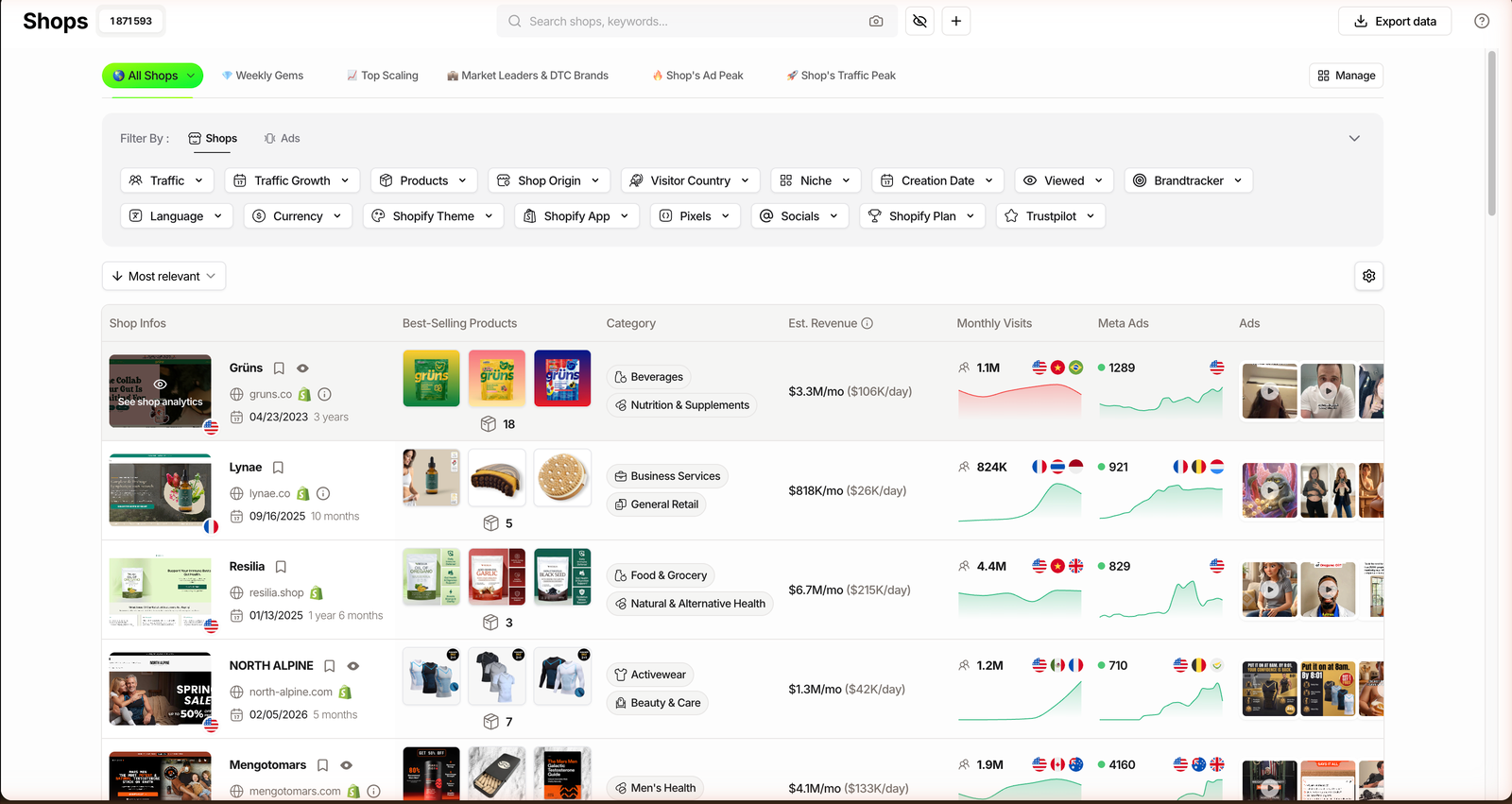
Its Marketplace shows you a curated feed. It doesn’t show you which live Shopify store is scaling a product this week, what a competitor’s estimated ad spend looks like, or which brand’s revenue is climbing. That is the demand side, and it is a different job.
That job is what a store-intelligence tool like TrendTrack is for. You can read a competitor’s real demand before you import a single product, and screen 1.87M Shopify stores by revenue signals rather than a curated list.
The point is not that AutoDS is weak. It is that sourcing and demand research are two separate tools, and AutoDS only owns one of them.
Related guide
How to find winning products with real data
The demand-side method AutoDS’s marketplace can’t replace.
The same gap shows up on the ad side. AutoDS can import a trending product, but it can’t tell you whether the ad selling it is still running, or how long it has been live.
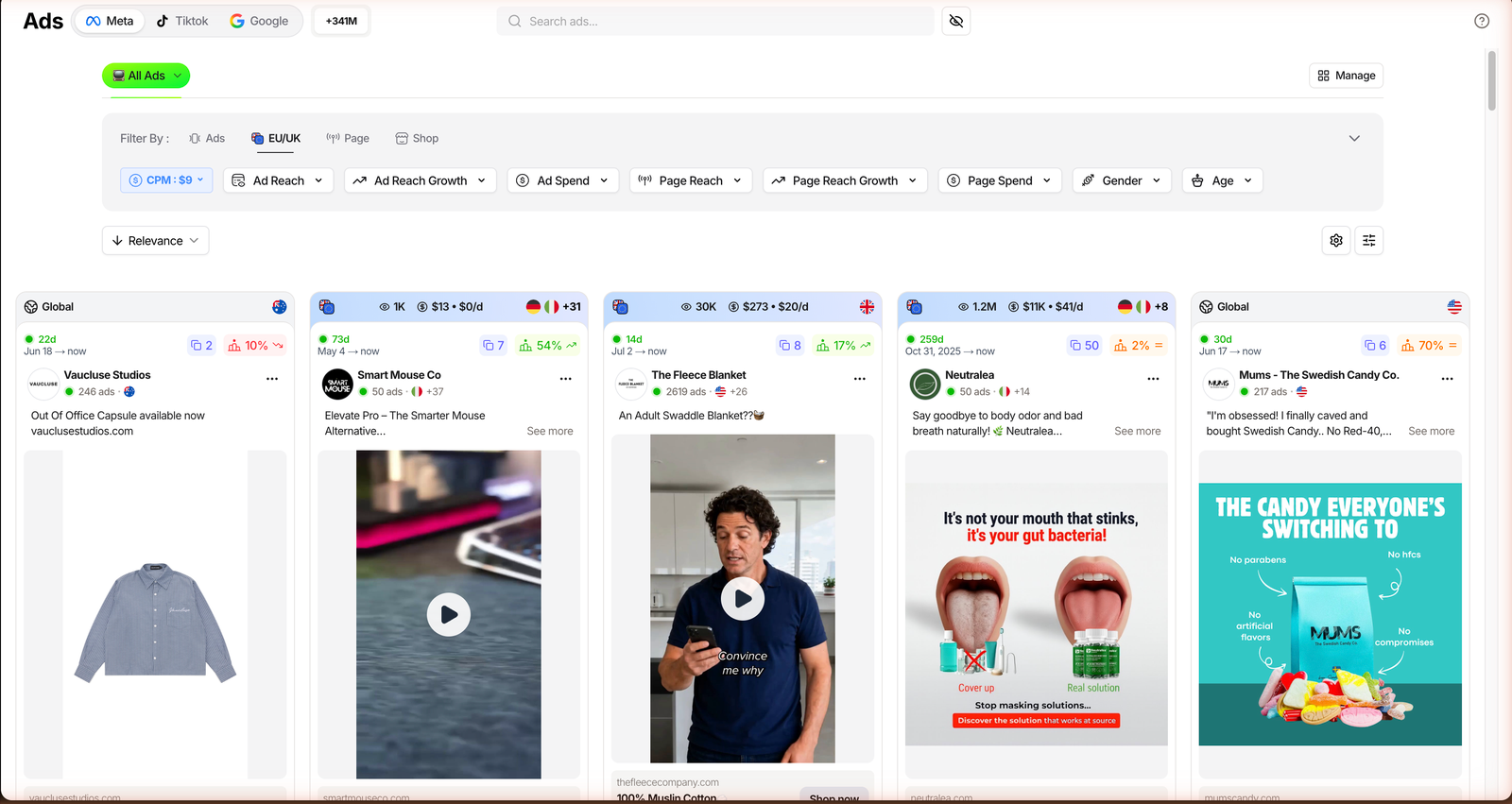
Plan check: TrendTrack’s Shops database is on Starter ($59/mo). The Ads and Advertisers modules start on Pro ($89/mo). Annual billing is 30% off, so roughly $42 and $63/mo. Full breakdown in our full TrendTrack review.
Think of it as two halves of the same workflow. One finds demand, the other fulfills it.
| Job | AutoDS | TrendTrack |
|---|---|---|
| Import, price and stock, fulfillment | Yes | No |
| Product research | Limited (curated feed) | Yes |
| Competitor ad spy | No | Yes |
| Estimated store revenue | No | Yes |
| Entry price | $26.90/mo | $59/mo |
Who should use AutoDS (and who should pair it)
AutoDS earns its place for the right operator. It is strongest when the selling decision is already made and the bottleneck is logistics.
If you land in that third bucket, sequence it right. Validate demand with TrendTrack’s Shops filters before you commit ad budget, then hand the winner to AutoDS to source and ship on autopilot.
FAQ
Is AutoDS worth it in 2026?
Yes, if you already sell and want sourcing, importing and fulfillment automated across channels. From $26.90/mo plus add-ons, it pays off once you manage a couple hundred products. It is weaker if your real problem is deciding what to sell, because its research is a curated feed rather than live competitor demand.
How much does AutoDS cost?
On the Shopify and eBay tier, Import is $26.90/mo, Starter $39.90/mo and Advanced $66.90/mo, with annual billing about 25% cheaper. Add-ons cost extra: auto-ordering at $9.90/mo and Virtual Assistant access at $14.97/mo. Entry is behind a low-cost paid trial, recently $1 for 14 days. Prices vary by sales channel.
Does AutoDS find winning products?
It gives you ideas. The AutoDS Marketplace uses AI to surface products from TikTok Shop, AliExpress and its warehouses, which is a useful head start. But it can’t show a specific competitor’s live ad spend or which stores are actually scaling. For that you need a spy tool like TrendTrack, with its Est. Revenue and 337M+ ad index.
Is AutoDS good for beginners?
It is beginner-friendly for the logistics side. The dashboard is clean, the Chrome extension makes importing fast, and pricing rules stop rookie margin mistakes. Just budget for the platform fees on top, and read the fulfillment settings carefully, since auto-ordering through personal buyer accounts conflicts with some marketplace terms.
Does AutoDS work with Shopify and TikTok Shop?
Yes. AutoDS supports Shopify, eBay, TikTok Shop, Wix, Facebook Marketplace, WooCommerce and Amazon, with a separate plan per platform. You can manage several stores from one dashboard.
Verdict
AutoDS does exactly what it promises: it automates the back office of a dropshipping store, and the price and stock monitoring alone can be worth the subscription for a busy catalog.
Just buy it for the right reason. It is a fulfillment and automation tool, not a demand-research tool. Bought to save time on sourcing and orders, it delivers. Bought to answer “what should I sell,” it will disappoint.
Verdict: 4.2/5. A strong execution layer that owns sourcing and fulfillment, not product discovery.
Best for: hands-off sourcers and multi-channel sellers. From $26.90/mo (or about $19.90/mo billed yearly), plus add-ons.
Automate fulfillment, but decide with data first.
Screen 1.87M+ Shopify stores and 337M+ ads to see what is really scaling before you import it. Shops is on Starter ($59/mo, or $42 annually); ad spy starts on Pro.