Last verified July 16, 2026. Margin and cost ranges are typical, not audited; TrendTrack counters and prices were checked live in-app.
Holding no inventory does not mean keeping most of the sale. That is the myth that costs new stores their first thousand dollars.
The pitch sounds clean: buy a product for $10, sell it for $30, pocket $20. In practice, the $20 is where every other cost lines up to take its cut, and paid traffic takes the biggest bite. The gap between what looks like your margin and what you actually keep is the whole game.
Gross margin in dropshipping is typically 50% to 65% (sale price minus product cost). But net margin, what you keep after ads, payment fees and refunds, usually lands around 10% to 20%, and can drop to single digits when your customer acquisition cost runs high. Your price point and ad cost decide where you sit.
Disclosure: some links on this page are affiliate links. If you subscribe through them we may earn a commission at no extra cost to you. We tested every TrendTrack feature mentioned here on a paid account.
What counts as a healthy dropshipping margin?
There are two numbers, and mixing them up is where the confusion starts. Gross margin is the sale price minus what the product and its shipping cost you. Net margin is what remains after every other expense: ads, payment processing, refunds, apps and overhead.
Gross margin looks generous because it ignores the most expensive part of dropshipping. Net margin is the money you actually keep, so it is the only one worth planning around.
Typical ranges for paid-traffic dropshipping, 2026. Directional, not audited.
Read those numbers as a warning line, not a promise. A store sitting near 15% net has room to absorb a bad ad week or a refund spike. A store under 10% net is one slow week away from losing money. If you are still starting a dropshipping store, decide your target net margin before you pick a product, not after.
The case the margins actually work
The model is not broken. Carrying no stock means no cash frozen in a warehouse, no minimum order quantities, and the freedom to swap products the moment the data turns. That flexibility has real value.
Most operators price at a 2x to 3x markup on product cost, which is what produces that 50%-plus gross margin. A product pricing calculator shows where that markup actually leaves you. Here is where a single $30 order lands once every line is counted.
| Line on a $30 sale | Amount |
|---|---|
| Sale price | $30.00 |
| Product + shipping (COGS) | – $10.00 |
| Payment processing (2.9% + $0.30) | – $1.17 |
| Ad cost per sale (CAC) | – $12.00 |
| Refund + chargeback allowance | – $1.00 |
| Net profit | $5.83 (19%) |
The margin is real, but notice what carries it. Gross margin here is 67%. Net margin is 19%. The entire difference is the ad cost, and that is the number you control least once a campaign is live.
Why margins are thinner than you think
The myth dies on the costs nobody screenshots for their “day in the life” video. The product price is rarely the issue. The leaks are everywhere else.
Ad CAC
The biggest line by far. Usually $8-15 per cold sale, often more in crowded niches.
Payment fees
Roughly 2.9% + $0.30 per order, plus any gateway or currency fee.
Refunds
Chargebacks and refunds hit both the sale and, often, the ad spend behind it.
Apps + returns
Subscriptions, review apps, disputes and the odd return that quietly erode the rest.
Payment processing alone runs near Shopify’s standard transaction fees on every order, and it compounds at volume. None of it shows up in gross margin.
But the real killer is customer acquisition cost. When you buy nearly every sale through Meta or TikTok, your ad account sets your margin more than your supplier does. A $5 rise in CAC on a $30 product can turn a comfortable 19% net into a break-even grind. That is why margin is an advertising problem before it is a sourcing problem.
What your real margin depends on
There is no single “dropshipping margin.” Yours is a function of three levers, and each one has a rough threshold worth knowing.
Price point
A fixed $10-12 CAC hurts a $25 product and barely dents a $70 one. Higher tickets carry ad cost better.
AOV
Bundles and upsells that lift average order value spread one ad cost across more revenue.
Repeat rate
The second sale has near-zero CAC. A 20%+ repeat rate quietly doubles the value of every acquired buyer.
Notice that two of the three levers are about spreading or reusing your ad cost, not cutting your product cost. That is the honest center of the whole topic: in a paid-traffic model, margin management is CAC management.
Do you actually need a $60 product to survive, or can a $25 one work with a strong upsell? The answer sets your entire strategy, so run the math before you build the store.
Related guide
Is Dropshipping Worth It in 2026?
Margins are half the answer to whether the model pays.
How to pressure-test a margin before you commit
Before you scale spend on any product, you want two outside numbers: what competitors charge for the same thing, and what they seem to spend to sell it. Both are visible from the outside if you know where to look.
We ran this on a paid TrendTrack account. In the Shops module you can filter by best-seller price and switch on the Est. Revenue column, so you see the price band a niche actually sells at and a rough size for each store. Treat the revenue figure as an estimate, not a bank statement.
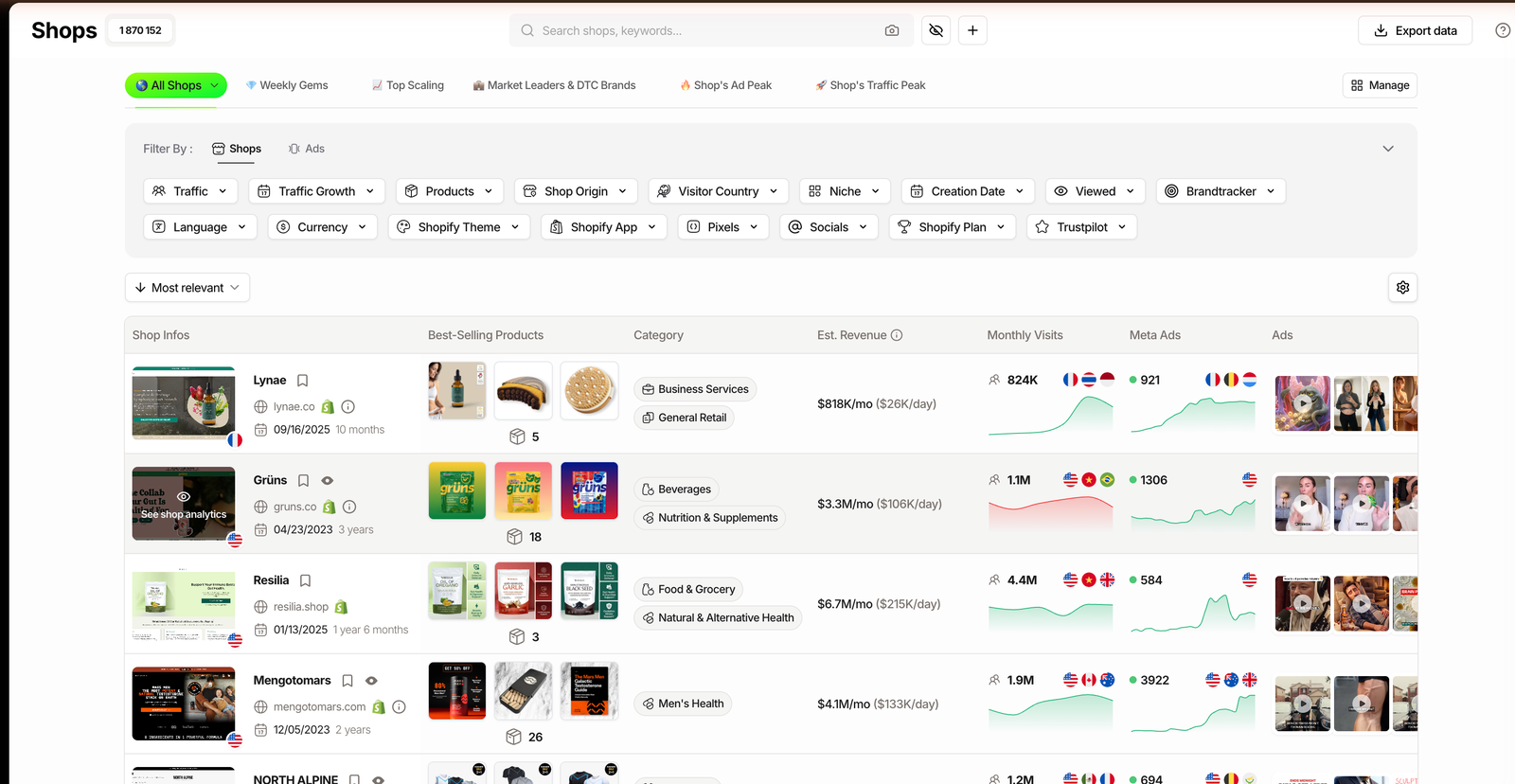
That price band tells you the ceiling you can charge, which sets your gross margin before you spend a cent. If everyone sells the product at $25, planning your model around a $40 price is wishful thinking.
The second number is the harder one: cost to acquire a customer. You cannot see a rival’s exact CAC, but the Ads module reads real EU and UK ad transparency data and converts reach into estimated spend with a configurable CPM ($9 by default). Watching what a competitor pours into a creative that keeps running is the closest public proxy for “this product can carry paid traffic.”
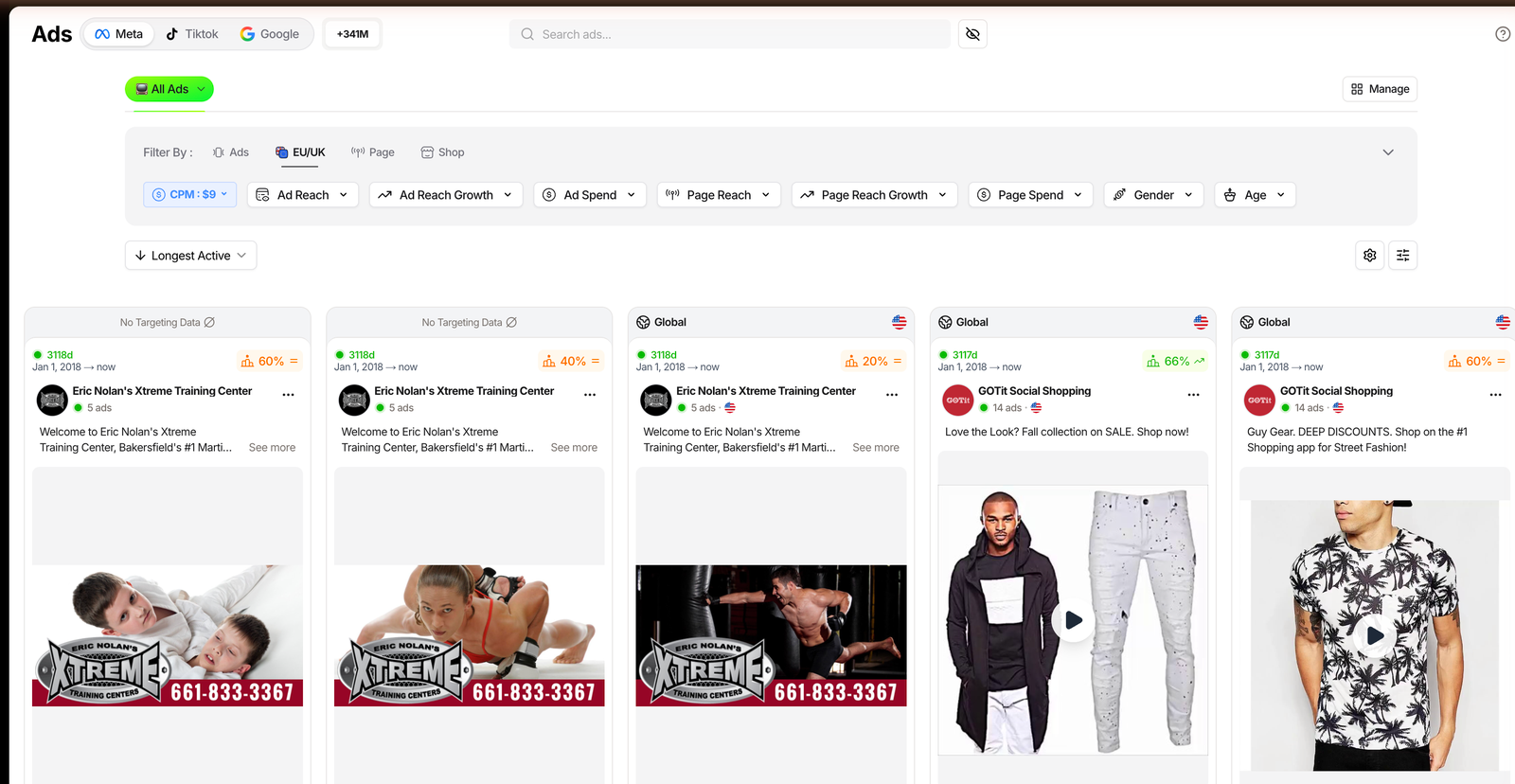
Plan check: the Ads and Advertisers modules start on Pro ($89/mo). The Shops module, with best-seller price and Est. Revenue, is on Starter ($59/mo, or $41/mo billed annually). So price benchmarking is cheap; spend benchmarking needs Pro.
Related guide
How to Check a Competitor’s Ad Spend
Your ad cost is the biggest swing on net margin. See what rivals actually spend.
Check competitor pricing in TrendTrack
Your margin protection checklist
Margin is not a number you find. It is a set of decisions you make before and during a launch. Work these three in order.
Once a store is live, one glance at your net margin tells you which lane you are in.
| Net margin | Health | What to do |
|---|---|---|
| 20%+ | Healthy | Scale spend carefully, protect the CAC that got you here. |
| 10-20% | Tight | Lift AOV or repeat rate before adding budget. |
| Under 10% | Underwater | Fix price or CAC now; one refund wave and you lose money. |
FAQ
What is a good profit margin for dropshipping?
A healthy net margin usually lands around 15% to 20% after product cost, payment fees, refunds and ad spend. Gross margin (price minus product cost) is higher, often 50% to 65%, but the ad cost to get each sale is what pulls net down. Anything under 10% net leaves almost no room for returns or a bad ad week, so treat that as a warning line rather than a target.
How do you calculate dropshipping profit margin?
Net margin = (revenue – all costs) / revenue. Take your sale price, subtract product plus shipping cost, payment processing fees (roughly 2.9% + $0.30), your ad cost per sale, and a small refund allowance. Divide what is left by the sale price. On a $30 order with $10 product, $1.20 fees and a $12 ad cost, you net about $5.80, or roughly 19%.
Why are dropshipping margins so low?
The product itself is rarely the problem. The margin gets eaten by paid traffic. Most stores buy nearly every sale through Meta or TikTok ads, so customer acquisition cost is the single biggest line. Add payment fees, refunds, chargebacks and the occasional return, and a healthy-looking gross margin can shrink to single digits in net terms.
Is dropshipping profitable in 2026?
It can be, but not passively. The stores that stay profitable price for their ad cost, push repeat purchases, and cut the swing costs (refunds, disputes) that quietly drain margin. Thin margins mean volume and retention matter more than a single viral product. Profitability is a function of discipline on CAC and price point, not the absence of inventory.
What is the difference between gross and net margin?
Gross margin only subtracts the product and shipping cost from the sale price, so it looks generous. Net margin subtracts everything else too: ads, payment fees, refunds, apps and overhead. In dropshipping the gap between the two is large because paid traffic sits outside gross margin. Always plan around net, because that is the money you actually keep.
The bottom line
Dropshipping margins are neither the fat numbers the ads promise nor the death sentence the skeptics claim. They are thin but manageable, and they live or die on two decisions: your price point and your cost to acquire a customer.
Get those right and a 15% to 20% net margin is a real business. Get them wrong and no supplier discount will save you. The fastest way to stop guessing is to screen the market with TrendTrack before you spend, so your price and your ad budget are set against what competitors actually do, not what you hope they do.