Last verified July 16, 2026. TrendTrack store counts checked live in the app; platform rules cross-checked against Amazon Seller Central.
You have a product in mind and roughly $500 to test it. The first fork in the road is not the supplier or the ad angle. It is where the product lives: an Amazon listing, or your own Shopify store.
That single choice shapes your margins, your traffic, your rules and whether you end up with a brand or just a sales channel. Both are real dropshipping models. They just reward very different sellers.
Amazon dropshipping puts your product in front of built-in marketplace traffic, but under strict rules, thin margins and no brand or customer data. Shopify dropshipping costs more setup and your own traffic, yet you keep the branding, the margins and the customer list. Beginners often lean Amazon; brand builders lean Shopify.
The two models in plain English
Amazon dropshipping means listing a product on Amazon’s marketplace and having a supplier ship it once it sells. You are the seller of record, so the shopper buys from your listing, not from the supplier behind it. You also compete inside Amazon’s own search results, next to similar listings, where price and reviews decide who wins the sale.
If you are still mapping the basics, our guide on how to start dropshipping from scratch covers the groundwork both models share.
Shopify dropshipping means running your own store on your own domain. You choose the theme, the price and the checkout, and a supplier app fulfills each order behind the scenes. Nobody sends you traffic, so you earn every visit through ads, content or an audience you build.
The split is simple. On Amazon you rent space inside someone else’s mall. On Shopify you build your own shop and bring your own crowd.
If you’re just starting out
Amazon hands you traffic on day one. Shoppers are already there with cards out, so a clean listing can make sales without a single ad. That head start is the single biggest reason beginners try the marketplace first.
The catch is the rules. Amazon requires you to be the seller of record and bans a supplier from shipping with its own invoices or branding, which is exactly why the classic AliExpress-to-Amazon flow breaks policy.
Amazon, as a beginner: pros
- Built-in buyer traffic from day one
- No store to design or host
- Trust of the Amazon checkout
Amazon, as a beginner: cons
- Strict seller-of-record rules
- Direct price competition on the same page
- No customer email, no retargeting
Shopify asks more of you upfront. You build the store, install a supplier app, and you own the traffic problem from hour one. Our walkthrough on how to set up a Shopify store step by step shows the full setup.
For a first test with no audience and no ad budget, Amazon gets you to a sale faster. For learning the full operator skill set, from traffic to retention, Shopify teaches more. Plenty of sellers do a stint on each before they commit.
As you grow the business
Margins are where the two models separate. Amazon takes a referral fee on every sale, often around 15% in many categories, on top of your product cost. On a $30 item that is roughly $4 to $5 gone before you have even paid the supplier.
Shopify charges a flat monthly subscription plus payment processing, with no cut of the item price itself. At low volume the Amazon fee can feel cheaper. As orders climb, a percentage of every sale gets expensive fast.
| Factor | Amazon dropshipping | Shopify dropshipping |
|---|---|---|
| Cost structure | Referral fee per sale | Flat monthly + payment fees |
| Built-in traffic | Yes | No |
| Profit margin ceiling | Lower (fee + price war) | Higher (you set price) |
| Own the customer data | No | Yes |
| Branding control | Limited | Yes |
| Platform suspension risk | High | Low |
| Sellable as an asset | No | Yes |
| Best for | Fast first sales, no audience | Brand builders, repeat buyers |
Then there is ownership. On Shopify you keep the customer email, the pixel data and the brand. On Amazon the buyer is Amazon’s customer, not yours, and you cannot retarget them later.
Related guide
Shopify Dropshipping: The Complete Guide
The full playbook for the store-owner path, start to scale.
If you want repeat buyers and a brand you can market to, Shopify wins the growth phase. If you just want volume pushed through an existing firehose, Amazon still holds up.
At operator scale
At scale the question changes from sales to defensibility. A Shopify brand with an audience, an email list and a recognizable name is an asset you can grow, and one day even sell. Buyers of ecommerce businesses pay for that repeatable engine, not for a store that only rents its traffic.
An Amazon business lives or dies by the account. A policy change or a suspension can freeze your revenue overnight, and your recourse is limited.
Rule check: Amazon’s dropshipping policy is explicit that you must be the seller of record, handle returns yourself, and remove any third-party invoices or packing slips before shipment.
Shopify at scale: pros
- You own the brand and the audience
- Email and retargeting compound over time
- The business can be valued and sold
Shopify at scale: cons
- You pay for every visitor you get
- Ad and creative skill is non-negotiable
- Slower to first revenue than a marketplace
None of this makes Amazon a mistake. Many brands keep an Amazon listing as a second channel for discovery, while the Shopify store stays the home base they actually own.
For a durable, sellable business, Shopify is the stronger foundation. Amazon stays a powerful sales channel, but it is a channel you rent, not an asset you own.
The honest verdict, and how to choose
There is no universal winner here, only a better fit for where you are right now. Match the model to your budget, your goal and your appetite for platform risk.
You can also run both. Many sellers validate demand on Amazon, then build a Shopify brand around the winners to capture the margin the marketplace was taking. The order matters less than the discipline of proving demand before you scale spend.
Whatever you pick, you still need to know what sells
Disclosure: some links on this page are affiliate links. If you subscribe through them we may earn a commission at no extra cost to you. We tested every TrendTrack feature mentioned here on a paid account.
Here is the part both camps skip. The platform rarely decides whether you win. The product and the demand behind it do.
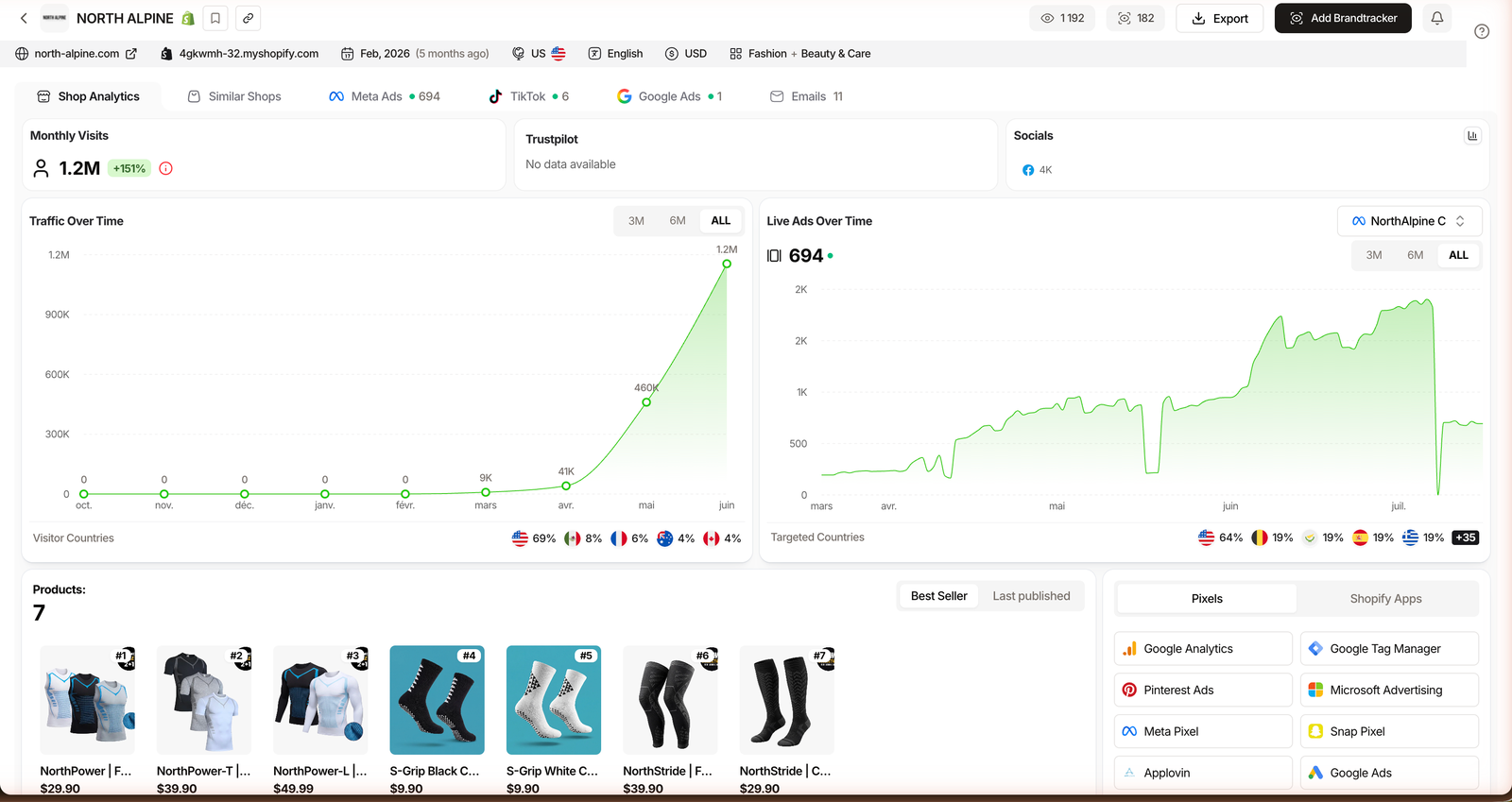
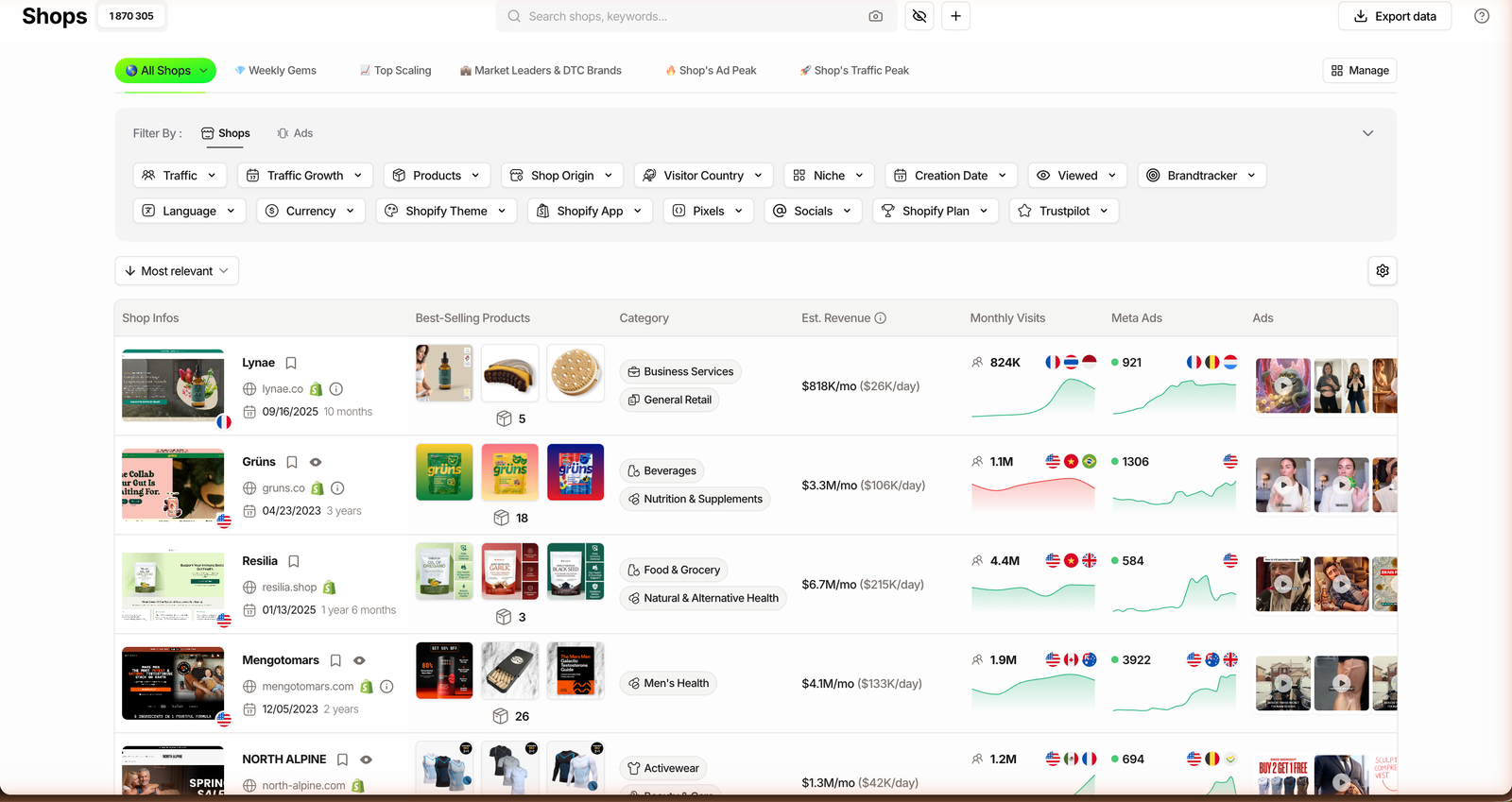
If you go the Shopify route, you can reverse-engineer live Shopify stores instead of guessing. TrendTrack indexes 1.87M of them, filterable by 17 criteria, with an estimated revenue column so you can see roughly what a store pulls per month. You can filter by niche, country, traffic growth or the apps a store runs, then open any store to study its products and ad activity.
Related guide
The Shopify Store Database, Explained
How to screen 1.87M stores by revenue, niche and tech stack.
One honest caveat. TrendTrack tracks Shopify stores, not Amazon sellers, so it leans to the Shopify path. Plans start at $59/mo, or $42/mo billed annually, and the store database is included from the entry Starter plan.
FAQ
Is Amazon or Shopify better for dropshipping?
It depends on your profile. Amazon gives you built-in traffic but strict rules, a price war and zero control over branding or customer data. Shopify asks for more setup and your own traffic, yet lets you keep the branding, the margins and the customer list. Beginners with no audience often move faster on Amazon; operators who want a durable brand lean Shopify.
Is dropshipping allowed on Amazon?
Yes, but with conditions. Amazon requires you to be the seller of record, handle returns yourself, and forbids a third-party supplier from shipping in its own branding or invoices. The classic order-from-AliExpress-to-an-Amazon-buyer flow violates that policy. The source is the Amazon Seller Central dropshipping policy.
Which is cheaper to start, Amazon or Shopify dropshipping?
The structures differ. Amazon has no required subscription on its individual plan but takes a fee on every sale, which eats into margins at low prices. Shopify charges a flat monthly subscription plus payment fees regardless of volume. At low volume Amazon can cost less; as you scale, the per-sale fee becomes the expensive option.
Can you do dropshipping on both Amazon and Shopify at once?
Yes, and many sellers do. They validate a product on Amazon for the traffic, then build a Shopify brand to capture the margin and the customer data. The two do not exclude each other; they serve different stages. The constant across both is that you still need a product that sells.
Which platform has better profit margins for dropshipping?
Shopify, generally. You control the price, the branding and the customer relationship, with no per-sale commission skimming each order. Amazon trades a slice of margin for built-in traffic. The Shopify tradeoff is that you pay for and manage your own traffic acquisition through ads, SEO and organic content.