Last verified July 16, 2026. Store and ad counts pulled live from a paid TrendTrack account; search trends from DataForSEO (US) and Google Trends.
Every few months a viral thread announces that dropshipping is dead. It gets thousands of likes, and then the people who wrote it go quiet.
Here is the pattern nobody points out: the loudest voices declaring it dead usually quit. The people still shipping orders rarely write threads about it. So the honest answer is not a clean yes or no.
No, dropshipping is not dead in 2026. What died is the lazy version: a random AliExpress product at a 5x markup, no brand, 30-day shipping, and no ad testing. The model itself, selling first and buying after the order, is more competitive and less forgiving, but very much alive.
Where the “dropshipping is dead” claim comes from
The claim is not made up. It comes from four real shifts that anyone who ran ads in the last few years has felt.
Ad costs went up and generic products got copied within days. Buyers got better at spotting a drop-shipped store, and most beginners quit before they ever learn product research.
| The claim | What actually changed |
|---|---|
| “It’s completely saturated” | Generic gadgets are saturated. Specific niches and product angles are not. Saturation is a product problem, not a model problem. |
| “Ad costs killed it” | CPMs rose, so thin margins broke. Stores built on real margin and a brand still clear the higher cost of acquisition. |
| “Everyone is doing it” | Most who start also quit within months. The field is crowded at the entrance and thin where it counts: patience and research. |
| “Long shipping ruins it” | The 30-day AliExpress route hurts trust. Sourcing agents and 3PLs now cut delivery to a week or less for scaling stores. |
Notice the pattern. Every one of those attacks a specific version of dropshipping, not the mechanics of the model itself.
Why dropshipping is not dead: the live evidence
Forget the opinions for a second. Look at how much commerce is actually running right now.
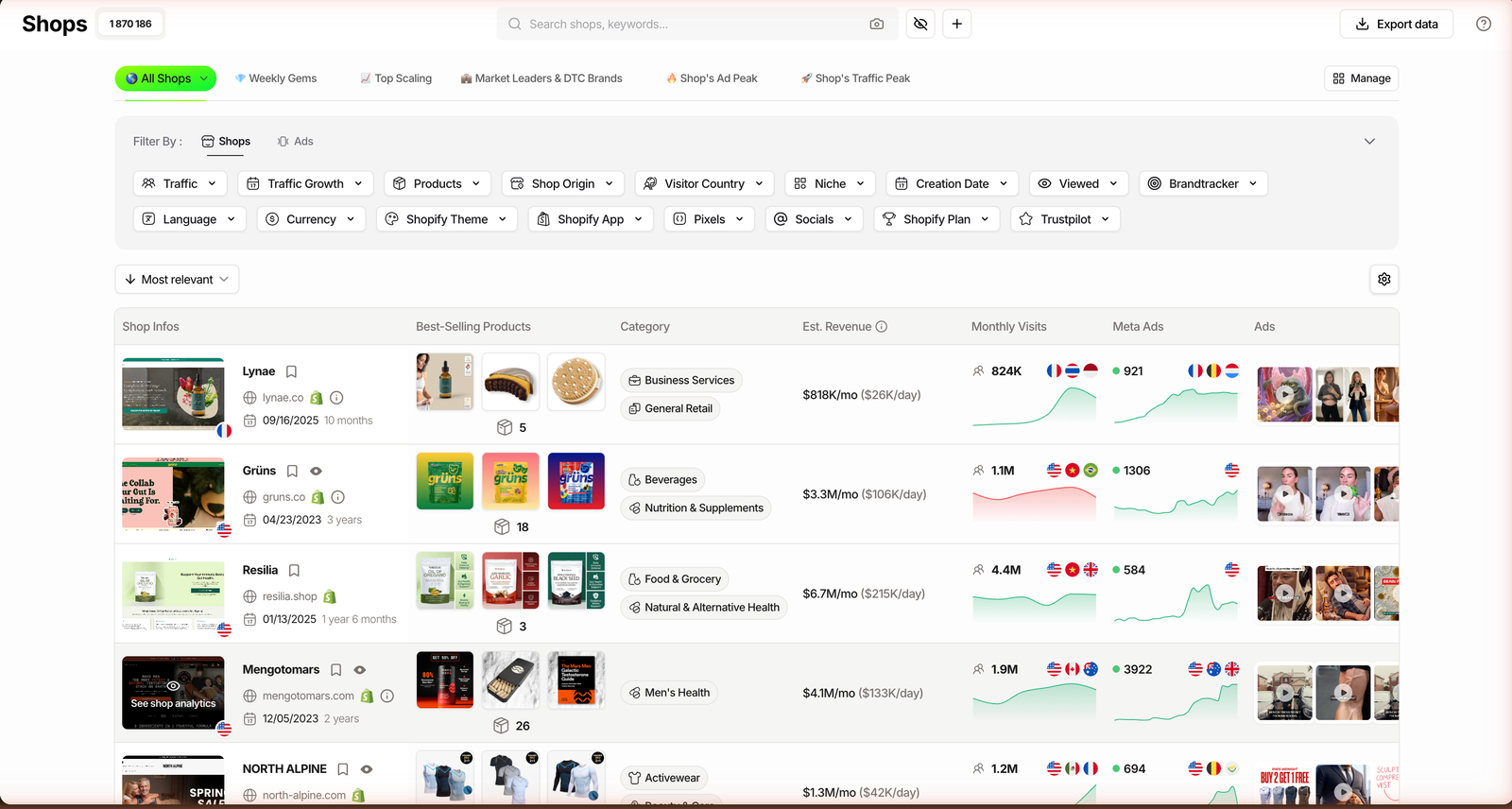
TrendTrack index, checked July 2026. Coverage is estimated, not a full census of Shopify.
Search demand tells the same story. Interest in “dropshipping” is still around 135,000 US searches a month, up more than 200% year over year in DataForSEO’s index (US, July 2026), and Google Trends still shows steady interest. A dead market does not pull those numbers.
One honest nuance: beginner-intent queries cooled off. Searches like “how to start dropshipping” are down roughly 45% year over year, while the core term keeps climbing. That is a market maturing, not disappearing, and independent market analysts project continued growth for the model overall.
There is also a channel that barely existed for the old playbook: free organic reach. A single TikTok video can put a product in front of hundreds of thousands of people at zero ad cost, so you can gauge demand before you fund a paid test. That lowers the price of being wrong, which is the exact thing that used to wipe out beginners.
What actually died (the honest part)
Saying “not dead” is not the same as saying “nothing changed”. Plenty of the old playbook is genuinely finished.
The random general store is dead. The 5x markup on a $3 gadget with no angle is dead. So is “post the product and wait”, the AliExpress-to-Shopify arbitrage with month-long shipping and zero customer service.
What’s easier now
- Data tools show what is already scaling, no guessing
- TikTok organic reach can seed a product for free
- Sourcing agents and 3PLs cut shipping to days
- UGC creators make testing creatives cheap
What’s harder now
- CPMs are higher across Meta and TikTok
- Generic products saturate within days
- Buyers recognize and distrust lazy stores
- The margin for error on pricing is thinner
What replaced the old model is not a secret. Niche brands, real product angles, faster fulfillment, and product research based on evidence instead of a feeling.
Put plainly, the old game was arbitrage: buy low on AliExpress, sell high to a cold audience, keep the spread. The new game is brand: own a niche, earn trust, and make the product feel like yours even when a competitor can source the same unit.
But isn’t dropshipping saturated?
This is the objection that deserves its own answer, because the word “saturated” is doing a lot of work in those viral threads.
There are roughly 1.87M live Shopify stores in TrendTrack’s index, spread across every niche, price point, and country. Saturation is never global. It is specific: one product, sold to one audience, with the same tired creative everyone else is running.
The saturation test: if ten stores already sell the exact product you picked, with the same supplier photos and the same price, that pocket is saturated. Change the angle, the audience, or the offer, and the pocket reopens.
So the honest read is that generic products are saturated and always will be. Specific angles, fresh audiences, and better creative are not, and that gap is precisely where the operators still winning in 2026 do their work.
Will your dropshipping work? What it actually depends on
Here is the reframe that matters. “Is dropshipping dead” is the wrong question.
The real one is: will your version of it work? That depends on a handful of thresholds you can check before spending a dollar.
| Factor | Green light | Borderline | Red flag |
|---|---|---|---|
| Gross margin | 3x cost or more | 2x to 3x | Under 2x |
| Test budget | Enough for several products | One product only | Rent money |
| Product angle | Solves a clear problem | Nice-to-have | “It looks cool” |
| Branding and fulfillment | Own brand, fast shipping | Light brand, week+ shipping | No brand, 30-day shipping |
Count your green lights. Three or four, and dropshipping is very much alive for you. Mostly red flags, and it will feel dead, because that specific setup no longer works, not because the model is gone.
If you land on borderline, that is not a no. It is a signal to fix the weak factor first: raise your margin with a higher-perceived-value product, or widen your test budget before you scale. Red flags are the only real stop sign.
Related guide
Is Dropshipping Worth It in 2026?
The profit-and-time math behind the “should I even start” question.
How to run dropshipping that isn’t dead in 2026
So you counted your green lights and want to go. Good.
The point now is to do it deliberately, not to copy a 2019 course. If you are starting from zero, our guide on how to start dropshipping the right way walks the full setup.
Reality check: dropshipping is a distribution model, not a get-rich button. The people who make it work in 2026 treat it like a real business: product research, a testing budget, and a defensible angle. Skip those and any model looks dead.
Stripped to the essentials, doing it right comes down to three moves.
The single biggest change from the old playbook is this: stop guessing. You no longer have to scroll TikTok hoping something feels viral. You can look directly at what is already scaling, which stores are growing, which ads have been running for weeks, and which products sit behind them.
Related guide
How to Find Winning Products
The evidence-based way operators shortlist products before testing.
Tools like TrendTrack exist to turn that guessing into screening. You can filter stores by growth, read a competitor’s live ad spend, and see how long a creative has survived, which is the closest thing to proof that a product converts. Keep in mind figures like Est. Revenue and competitor spend are estimates, directional signals, not audited numbers.
Disclosure: some links on this page are affiliate links. If you subscribe through them we may earn a commission at no extra cost to you. We tested every TrendTrack feature mentioned here on a paid account.
Stop testing products on a hunch.
Screen the 1.87M+ stores TrendTrack tracks by growth and live ads before you spend on testing. From $59/mo (or $42/mo billed annually); ad spy starts on Pro ($89/mo).
Frequently asked questions
Is dropshipping dead in 2026?
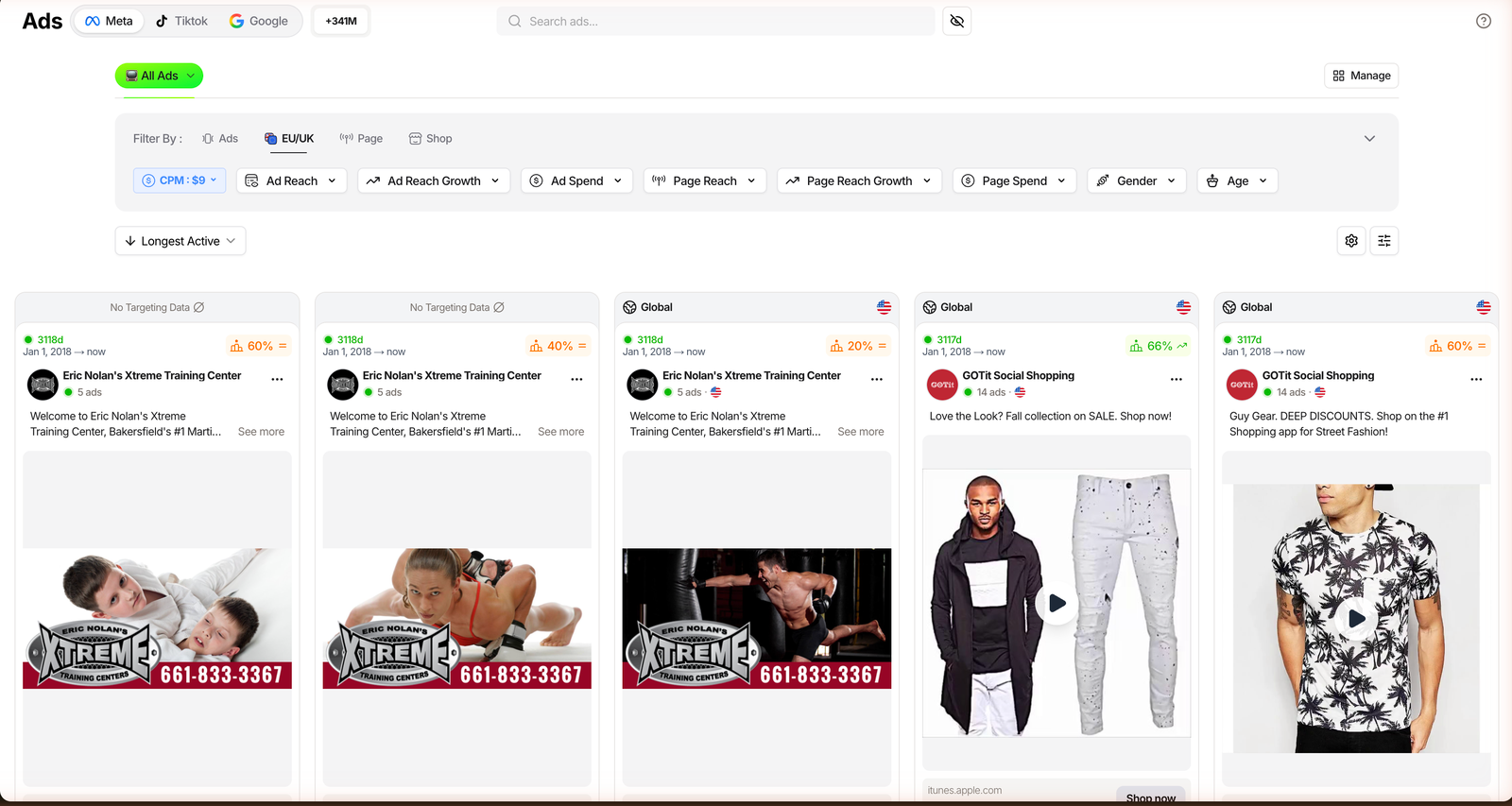
No. Dropshipping is more competitive and less forgiving than it was in 2018, but it is not dead. Search demand for “dropshipping” is still in the six figures monthly, over 1.8M live Shopify stores are tracked in tools like TrendTrack, and hundreds of millions of ads are running right now. What died is the lazy version: a random AliExpress product at a 5x markup with no brand and no angle.
Is dropshipping still profitable?
Yes, but margins are thinner than the old playbook promised. Winners typically build a niche brand, keep gross margins healthy enough to absorb rising ad costs, and test products with a real budget instead of one hero product. If your margin cannot cover a customer-acquisition cost that has gone up across Meta and TikTok, the specific product is unprofitable, not the whole model.
Why do people say dropshipping is dead?
Three reasons: ad costs rose, generic products got saturated, and most beginners quit before they learn product research, so they conclude the model is broken. The people who declare it dead usually stopped running stores. The ones still shipping rarely post threads about it. The criticism is aimed at one outdated version of dropshipping, not the model itself.
Is dropshipping worth starting as a beginner in 2026?
It can be, if you treat it as a real business and not a passive-income button. You need a testing budget, patience through failed products, and discipline around product selection. If you want something more hands-off, compare dropshipping and affiliate marketing. Beginners who copy random “winning product” lists tend to lose money. Beginners who study what is already scaling and pick a defensible angle have a real shot.
What killed the old dropshipping model?
Rising CPMs, market saturation on generic gadgets, longer trust curves with customers, and better-informed buyers who recognize drop-shipped stores. The AliExpress-to-Shopify arbitrage with 30-day shipping and no brand is what stopped working. Faster suppliers, niche branding, UGC ads, and data-driven product research are what replaced it.
How much money do you need to start dropshipping in 2026?
There is no single number, but plan for a store, a supplier or agent, and above all an ad-testing budget, since most of your early spend goes to finding a product that converts. Underfunding the testing phase is the most common reason beginners conclude “dropshipping is dead” when the real issue is quitting before the first winning product.
The honest verdict
Dropshipping is not dead. It grew up. The version that ran on cheap ads, blind product picks, and month-long shipping is gone, and it is not coming back.
What is left rewards operators who treat it like a business: pick a real angle, fund the testing, and study what is already winning instead of guessing. Do that, and 2026 is a fine year to start. Skip it, and yes, for you, it will feel dead.