Last verified July 16, 2026. Income and margin ranges are typical, not audited or guaranteed; TrendTrack counters and prices checked live in-app.
Ask how much you can make dropshipping and you get two useless answers: a screenshot of someone’s $80,000 month, or a comment swearing nobody makes a cent. The real number hides behind three questions.
What is left after the product and the shipping? How many of those sales can you actually buy with ads and still keep money? And how many months before the math turns positive?
Answer those three and you have your number. Skip them and you are just guessing at someone else’s.
The honest range: most beginners net around $0 for the first months while they test, because ad spend eats early sales. A store that finds a profitable product commonly lands between a few hundred and a few thousand dollars a month in net profit, and only a small minority scale past that. Your number is set by three levers, not by luck.
Disclosure: some links on this page are affiliate links. If you subscribe through them we may earn a commission at no extra cost to you. We tested every TrendTrack feature mentioned here on a paid account.
The honest answer is a range, not a number
Dropshipping income is not a salary. It is what survives after a stack of costs eats your revenue, and two stores pulling the same sales can keep wildly different amounts.
That is why a single figure is always a lie. A range with conditions attached is the closest thing to the truth.
Typical ranges, not guaranteed. Trend is US Google data, checked July 2026.
Read that -56% drop in US searches for this question correctly. It does not mean the money left the model. It means the tourists did, and the ones still asking are the ones actually building.
What you can actually make (the upside)
Forget the income claims for a second and think in stages. A store does not go from zero to a full-time income; it moves through phases, and each phase has a realistic ceiling.
The table below is framed as typical outcomes, not a promise. Plenty of stores never leave the first row.
| Stage | Monthly revenue | Net margin | Roughly left | Reality |
|---|---|---|---|---|
| Testing (first months) | $0 to $2,000 | Often negative | ~$0 or a loss | Most quit here |
| Getting traction | $2,000 to $10,000 | 10-20% | $200 to $2,000 | A real side income |
| Established store | $10,000 to $50,000 | 10-25% | $1,000 to $10,000 | A job you built |
| Scaled operation | $50,000+ | 10-20% | $5,000+ | Rare, and a team now |
Notice the margins barely move as revenue climbs. The lever that changes is volume, not efficiency, which is why “just scale it” only works once the underlying math already pays.
Why most stores make almost nothing
Here is the uncomfortable part. The majority of dropshipping stores never clear the first row of that table, and it is not because the owners were lazy.
It is because the profit stack is stacked against a thin-margin store. Every layer takes a cut before you see a dollar.
Sell a $30 product that costs $12 landed, and you have $18 of gross margin. If it costs you $20 in ads to get that sale, you just lost money to make a sale. That is not a rare accident; it is the default outcome until your creative and product are genuinely good.
Related guide
Is Dropshipping Worth It in 2026?
The break-even math behind the income question.
It comes down to three levers
Once you accept the number is a range, the useful question becomes: what moves it? Three levers do almost all the work, and they multiply against each other.
| Lever | What it controls | Move it by | Effect |
|---|---|---|---|
| Product & margin | What each sale is worth | Sell higher-margin items, not the cheapest | Sets your ceiling |
| Ad efficiency | What each customer costs | Better creative and tighter targeting | Decides if you keep any of it |
| Volume & repeat | How often it happens | More traffic, returning buyers, email | Turns a trickle into income |
Product and margin
This lever sets the ceiling for everything else. A $15 gadget with $9 of cost leaves almost no room to pay for ads, while a $70 product with a $25 cost gives you real margin to work with. Run each candidate through a product pricing calculator before you commit.
Higher-margin products are also harder to find, which is exactly why the winners protect them. That search is the single most valuable thing you can get right.
Related guide
How to Find Winning Products
Higher margins start with the product. Here is how to source them.
Ad efficiency and ROAS
Return on ad spend is the number that decides whether you keep any margin at all. As a rough rule, a store commonly needs a 2x to 3x ROAS just to break even, depending on its margin.
Below that line, more ad spend simply loses money faster. This is why your creative and your targeting matter more than your logo, your theme, or your store name.
Volume and repeat rate
Once the first two levers pay, volume is what turns a profitable trickle into a real income. More traffic, returning buyers, and a working email flow compound a small margin into something worth your time.
None of that saves a store that is unprofitable per sale, though. Scaling a loss just makes a bigger loss, which is the trap most beginners fall into. If you have not set up the store itself with any rigor, start with how to start dropshipping in 2026 before you touch the ad budget.
Anchor your number to real stores
You cannot promise yourself an income. You can, though, anchor your expectations to what comparable stores in your niche appear to be pulling in, instead of to a random YouTube thumbnail.
That is one thing a Shopify intelligence tool is genuinely useful for. TrendTrack indexes millions of live Shopify stores and puts an estimated monthly revenue on each one, so you can sanity-check what a store your size in your category tends to make.
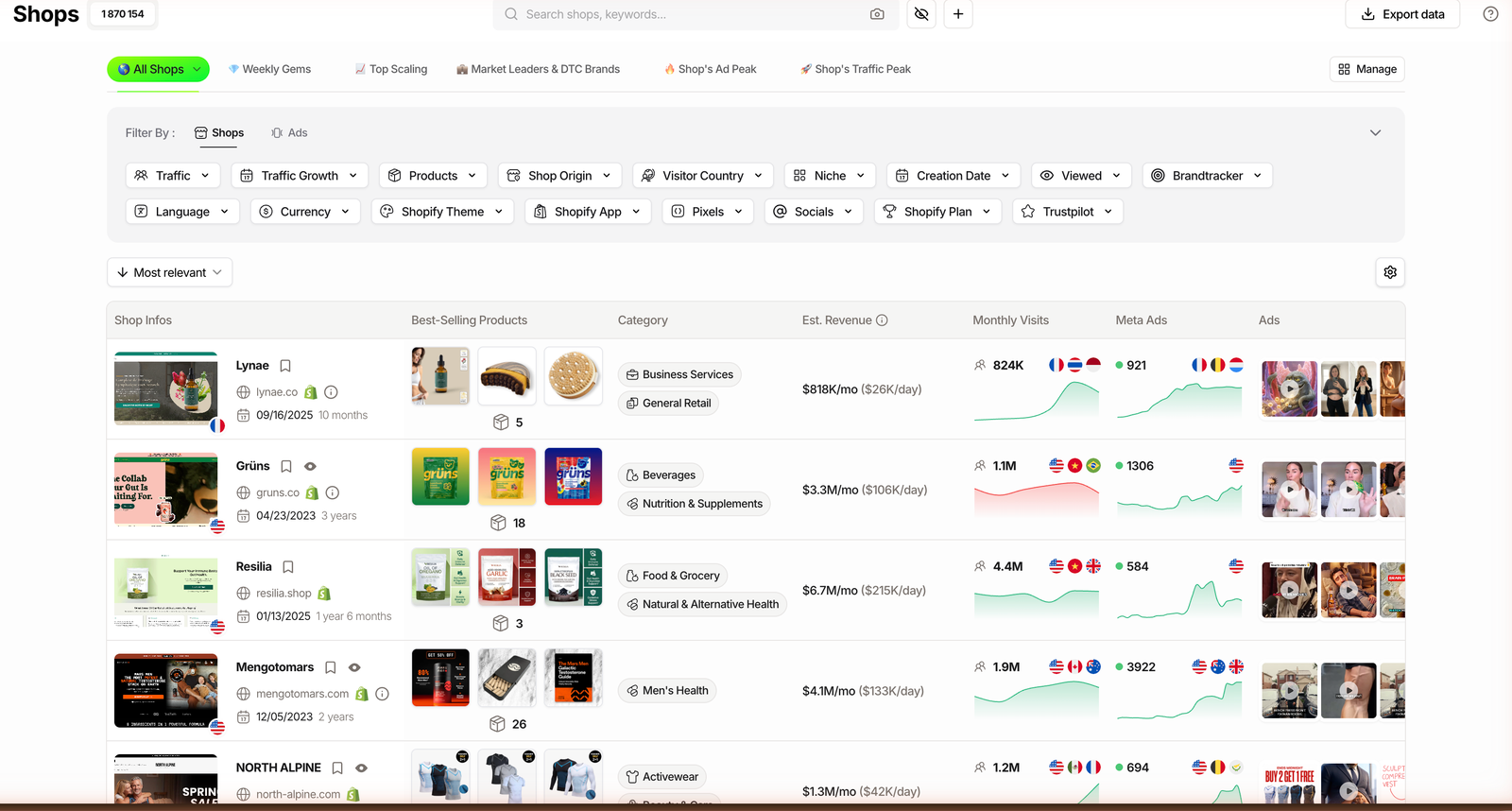
Keep the caveat in mind: Est. Revenue is an estimate, a speedometer read from outside the car, not the store’s real books. Used that way it is a reality check, not a guarantee. You can screen live stores by estimated revenue inside the Shops module, which is included on every plan from $59/mo (or $42/mo billed annually).
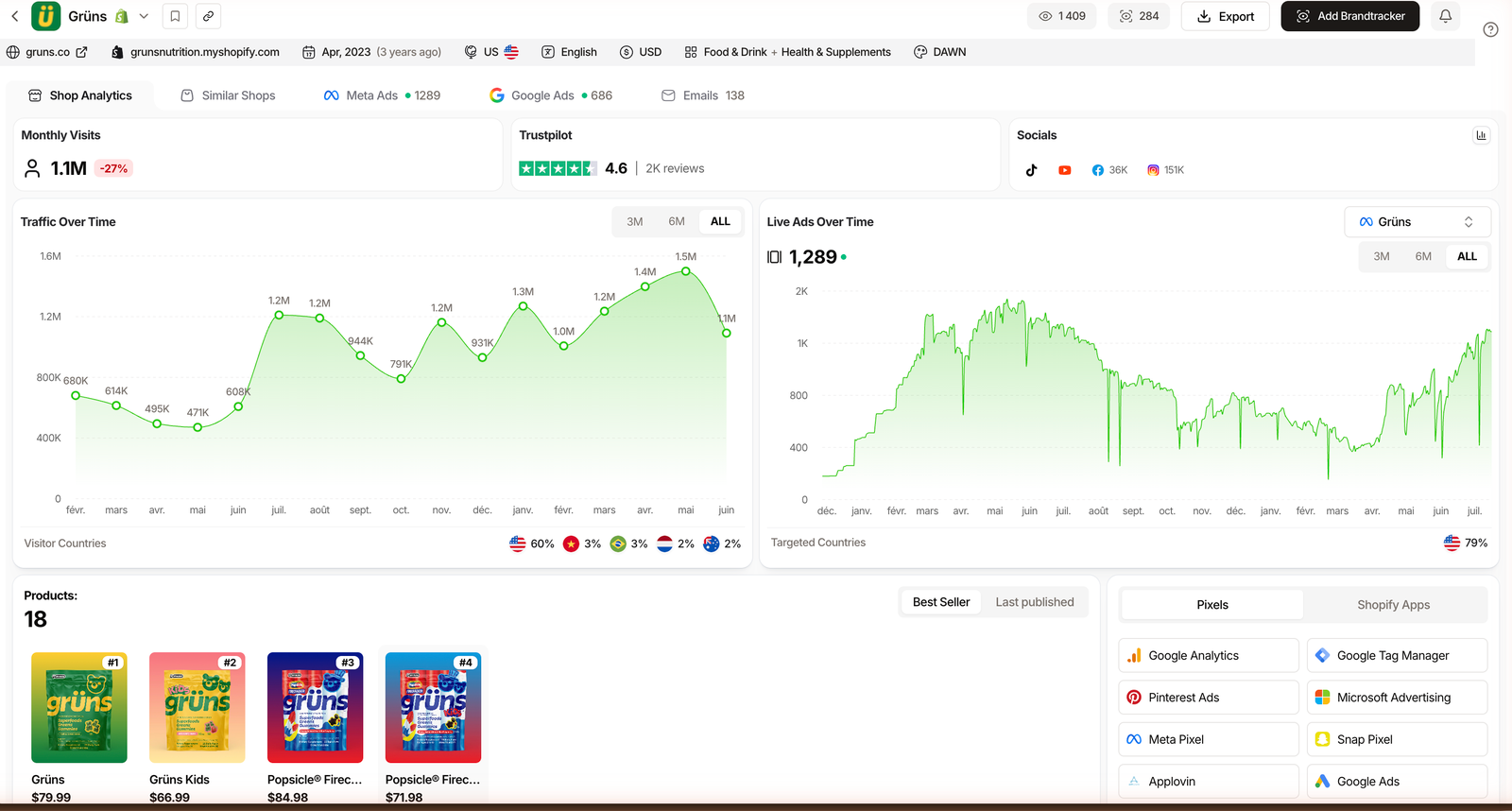
Seeing that a store roughly your size sits around a few thousand dollars a month, while another in the same niche is estimated far higher, tells you where the ceiling actually is. That beats guessing every time.
So, how much will you make?
The honest verdict depends on who you are and how you treat it. Three profiles cover most readers.
Why the number can be high
- You picked a real margin product, not the cheapest one.
- Your ads clear a 2x to 3x ROAS consistently.
- Repeat buyers and email lift each order’s value.
- You treat it as a business, not a side quest.
Why it usually stays low
- Thin margins get eaten by ad costs.
- You quit during the unprofitable testing phase.
- You scaled a product that never really paid.
- You expected passive income from an active job.
If you are a complete beginner, budget for months of near-zero net while you learn, and count the education as the return. If you are a part-timer who finds one solid product, a few hundred to a couple thousand a month is a realistic, unglamorous target.
If you are a committed operator willing to test relentlessly and manage margin, a full-time income is on the table, and so is the workload that comes with it. None of those are promises, and anyone selling you a fixed figure is selling you something.
FAQ
How much can a beginner make dropshipping?
Honestly, often around $0 net for the first few months, because testing burns ad budget before you find a product that pays. Once you find something profitable, a few hundred dollars a month is a realistic first milestone, not a guarantee. Treat the early phase as paid tuition, because that is what it is for most people.
Is dropshipping actually profitable in 2026?
It can be, for a minority who manage margins and ad efficiency. Typical net margins run 10% to 30%, and most stores never clear break-even because ad costs eat thin margins. It is a real, competitive business now rather than a shortcut, which is why fewer people chase it and why the ones who stay sell higher-margin products at a disciplined ROAS.
What is a good profit margin for dropshipping?
A net margin of 10% to 30% is typical for a healthy store, after product cost, shipping and ads. What matters most is that your gross margin is wide enough to absorb your customer acquisition cost and still leave something. A $15 product with $9 of cost rarely works; a higher-priced item with room to pay for ads gives you a fighting chance.
How much do dropshippers make per month?
It spans a huge range. Many make $0 or a small loss during testing, an established store commonly nets a few hundred to a few thousand a month, and a scaled operation can do more, though those are rare and run like real companies. Any monthly figure you see should be read as typical or estimated, never a fixed outcome you can count on.
Can you get rich dropshipping?
A few people do, but it is not a reliable plan. Dropshipping is a thin-margin business that rewards relentless testing and good products, not a passive income button, so betting your finances on getting rich from it is a bad idea. Building a modest, profitable store first is far smarter, and anyone guaranteeing wealth is selling a course rather than describing reality.
The bottom line on your number
How much you can make dropshipping is not a number you look up. It is one you build, out of your margin, your ad efficiency, and the months you are willing to put in before the math turns positive. Put those inputs into a simple dropshipping business plan before you spend.
The single best move is to stop guessing and start anchoring to what real stores in your niche actually do.
You can’t promise yourself a number. You can anchor it to real ones.
See estimated monthly revenue for millions of live Shopify stores and benchmark your own. Est. Revenue is an estimate, not audited, and the Shops module is included from $59/mo (or $42/mo annually), with a free Chrome extension and monthly billing you can cancel anytime.